Driving Utility CX Through Metrics, Insights, and Technology
Turning customer data, journey insights, and emerging technologies into actionable strategies for utility customer experience
E Source has a mission is to help utilities make and implement better data-driven decisions that positively impact their customers, their bottom line, and the planet.

Project Snapshot
Role: CX Insights & Strategy Analyst, E Source
Scope: Assisted multiple utility clients in improving customer experience by:
- Analyzing key CX metrics (CES, FCR, VOC)
- Designing self-service journeys to deflect calls
- Identifying non-survey-based methods to capture VOC
- Exploring AI tools like ChatGPT for internal and customer service applications
Outcome: Increased self-service adoption, improved first-contact resolution, captured richer customer insights, and recommended AI integration strategies — all while reducing operational costs and enhancing satisfaction
The Challenge
Utilities face several CX obstacles:
- High contact center volume — live calls are expensive, and customers want faster solutions.
- Declining survey participation — traditional VOC methods are becoming less effective.
- Complex customer journeys — multiple touchpoints, from billing to service requests, often create friction.
- Emerging AI integration — utilities need guidance on safely adopting AI while maintaining accuracy and trust.
The Approach
1. Call Deflection & Self-Service Optimization
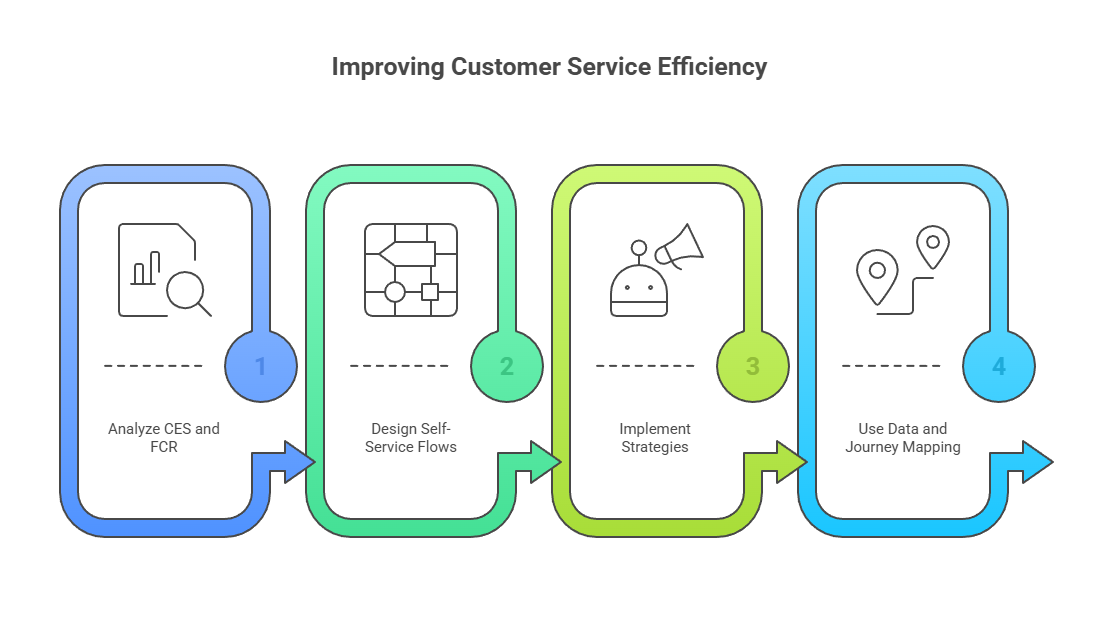
- Analyzed CES and FCR to identify high-effort interactions.
- Designed self-service flows (bill payments, reporting outages, start/transfer service).
- Implemented strategies to promote high-bill alerts and chatbots (e.g., Watt at Con Edison).
- Used data and journey mapping to identify bottlenecks and reduce repeat calls.
2. Capturing VOC Without Surveys
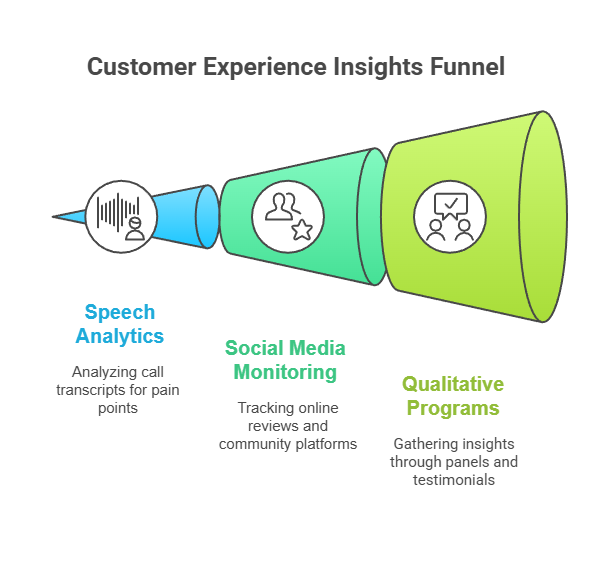
- Leveraged employee CX councils to surface trends from front-line staff.
- Used speech analytics and natural language processing on call transcripts to detect pain points and self-service opportunities.
- Monitored social media, online reviews, and community platforms like Nextdoor.
- Supported qualitative programs such as customer panels and video testimonials.
3. Exploring AI (ChatGPT & LLMs) for Utility Operations
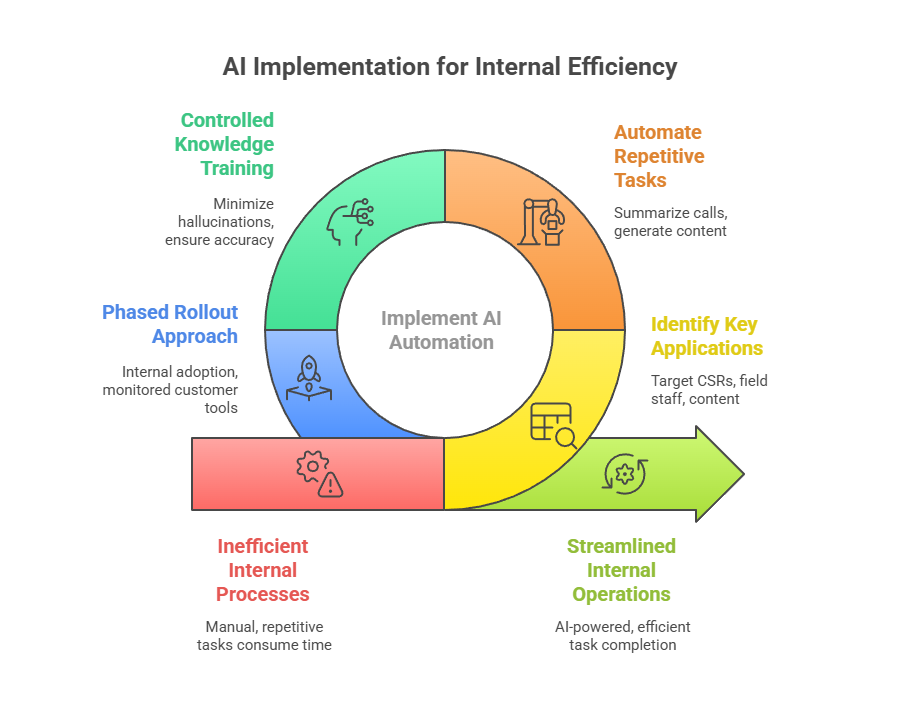
- Identified internal applications first: enabling CSRs, field-service staff, and content teams.
- Recommended AI for automating repetitive tasks, summarizing call transcripts, generating internal content, and supporting social media/email campaigns.
- Emphasized the importance of controlled, internal knowledge training to minimize hallucinations and inaccuracies.
- Proposed phased rollout: internal adoption → monitored customer-facing tools, only when AI outputs can be trusted.
Solution
Deliverables / Outputs
- Reports and insights, including:
- Self-service and call deflection playbook: workflows, IVR optimization, chatbot integration
- VOC strategy plan using non-survey data sources (employee councils, speech analytics, social monitoring, qualitative programs)
- AI adoption framework for internal teams, focused on high-value, low-risk applications
Impact
- Reduced call center volume: Optimized self-service options and high-bill alert programs deflected thousands of calls
- Improved FCR and CES: Data-driven insights enabled smoother first-contact resolution
- Enhanced VOC capture: Utilities gained richer understanding of customer pain points despite survey fatigue
- Early AI adoption guidance: Structured approach for safely leveraging ChatGPT internally, boosting employee productivity without risking misinformation
Key Skills Demonstrated
- CX metrics analysis (CES, FCR, VOC)
- Customer journey mapping and self-service design
- Non-survey VOC capture methods (employee councils, speech analytics, social monitoring, qualitative programs)
- AI strategy and risk mitigation for utility operations
- Cross-departmental collaboration and actionable reporting